Ford Rehires Engineers After AI Quality Checks Fail
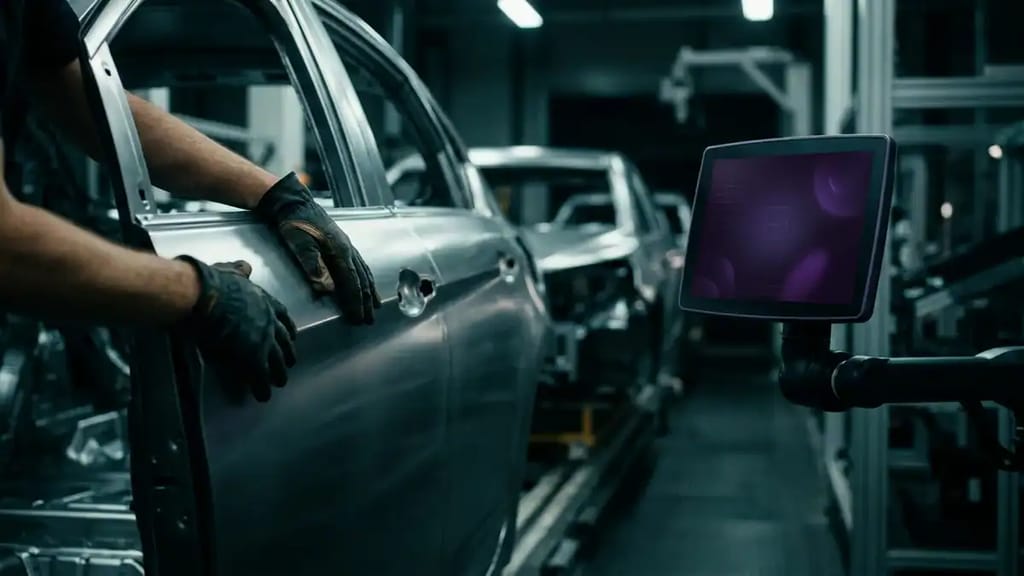
Ford rehiring human engineers after AI quality checks fell short is a clear reminder that AI works best alongside human expertise, not instead of it. The company found that automated systems could not reliably replicate the judgement required for complex technical inspections, leading to quality failures that cost more to fix than the automation saved. For UK businesses weighing up AI adoption, this is a useful case study before committing to wholesale replacement of skilled roles.
Table of Contents
What happened at Ford
Ford moved to automate parts of its quality inspection process using AI-driven systems, with the aim of cutting costs and speeding up production checks. The approach ran into problems when the AI systems produced inconsistent results on complex inspections, missing defects that experienced engineers would have caught. Ford subsequently brought human engineers back into those roles, effectively reversing the automation decision.
This is not an isolated case. A number of manufacturers and tech-adopting businesses have faced similar outcomes when AI is deployed without sufficient testing in real-world conditions. The pattern tends to follow the same shape: automation looks promising in controlled pilots, then underperforms when exposed to the variability of actual production environments.
Why AI struggled with quality checks
Quality inspection is a category of work that looks straightforward from the outside but relies heavily on contextual judgement. An experienced engineer does not just check against a fixed list of criteria; they apply accumulated knowledge about how components behave under different conditions, what defects tend to cluster together, and when something looks technically within tolerance but is likely to cause problems downstream.
Current AI systems, including vision models trained on large datasets, are good at pattern recognition within the bounds of what they have been trained on. They struggle when conditions shift, when defects are novel, or when the right call requires weighing up several factors at once in a way that has not been explicitly modelled. Ford’s inspections likely involved exactly this kind of nuanced assessment.
There is also a cost dynamic that catches businesses out. The upfront investment in AI tooling looks attractive compared to the ongoing cost of skilled labour. But when quality failures increase, the downstream costs, whether that is rework, recalls, warranty claims, or reputational damage, can far exceed whatever was saved on staffing.
What this means for UK businesses
UK manufacturers and SMEs in technical sectors are under real pressure to cut costs, and AI is frequently presented as a way to do that quickly. The Ford situation is worth reading carefully before committing to AI in any role where the quality of the output directly affects your product, your compliance obligations, or your customers.
The practical question to ask is not “can AI do this task?” but “what happens when AI gets this task wrong, and how quickly would we know?” In a quality inspection context, the answer is often “too late and at significant cost.” That changes the risk calculation considerably.
If you are in construction, engineering, food production, or any regulated sector, the compliance dimension adds another layer. AI systems that produce incorrect outputs in a regulated inspection context do not just cause rework; they can create liability. Human sign-off on critical checks is not just good practice in many cases, it is legally required.
Where AI does add genuine value
None of this means AI is not useful. The distinction is between tasks where AI augments a human and tasks where AI is expected to replace the human entirely. Augmentation tends to work well; replacement tends to fail at the edges, which is precisely where failures matter most.
In a small business or manufacturing context, AI genuinely earns its place in areas like flagging anomalies for human review, processing large volumes of routine data, drafting documentation, or handling first-pass sorting of images or records. The human still makes the final call on anything consequential. This approach keeps the efficiency gains without removing the safety net.
The businesses that get the most from AI tend to be the ones that treat it as a junior assistant rather than a senior specialist. It can handle volume, flag patterns, and reduce the grunt work. It should not be the last word on anything that could go wrong in a way that costs you money or damages your reputation.
Verdict
Ford’s experience is a useful corrective to the idea that AI adoption is straightforwardly cost-saving. When complex technical judgement is involved, removing human oversight is a risk, not an efficiency. UK businesses looking at AI tools should be honest about where human expertise is genuinely irreplaceable and build their processes accordingly.
The goal is not to resist AI but to deploy it where it actually performs reliably. That means piloting carefully, measuring quality outcomes rather than just speed or cost, and keeping skilled people involved wherever the consequences of getting it wrong are serious.
Frequently asked questions
Why did Ford bring human engineers back after using AI?
Ford found that its AI quality inspection systems produced inconsistent results and missed defects that experienced engineers would have caught. The cost of quality failures outweighed the savings from automation, so the company reversed the decision and reinstated human engineers in those roles.
Does this mean AI is not suitable for manufacturing?
Not exactly. AI can add real value in manufacturing for tasks like anomaly flagging, data processing, and routine pattern recognition. The problem arises when AI is used to replace skilled human judgement entirely on complex or high-stakes inspections, rather than to support it.
How should UK SMEs approach AI adoption after seeing stories like this?
Start by identifying tasks where AI augments a human rather than replaces one. Pilot carefully in real conditions, not just controlled tests. Measure quality outcomes alongside cost savings, and keep human sign-off on anything where a mistake would be costly or create compliance risk.
Are there sectors where removing human oversight from AI is particularly risky?
Yes. Regulated sectors including construction, engineering, food production, and healthcare carry legal obligations around inspection and sign-off. In these areas, relying solely on AI for quality checks can create liability as well as operational risk. Human oversight is often a legal requirement, not just a precaution.
What is the main lesson for businesses considering AI to cut costs?
The upfront cost saving looks attractive, but downstream costs from quality failures, rework, or compliance issues can quickly exceed what was saved. The better question is not whether AI can do a task, but what happens when it gets that task wrong and how quickly you would find out.
AI is a tool, and like any tool, it works best in the right hands, on the right job. Ford’s experience is a reminder that deciding where those boundaries lie is still a task that requires human judgement.
