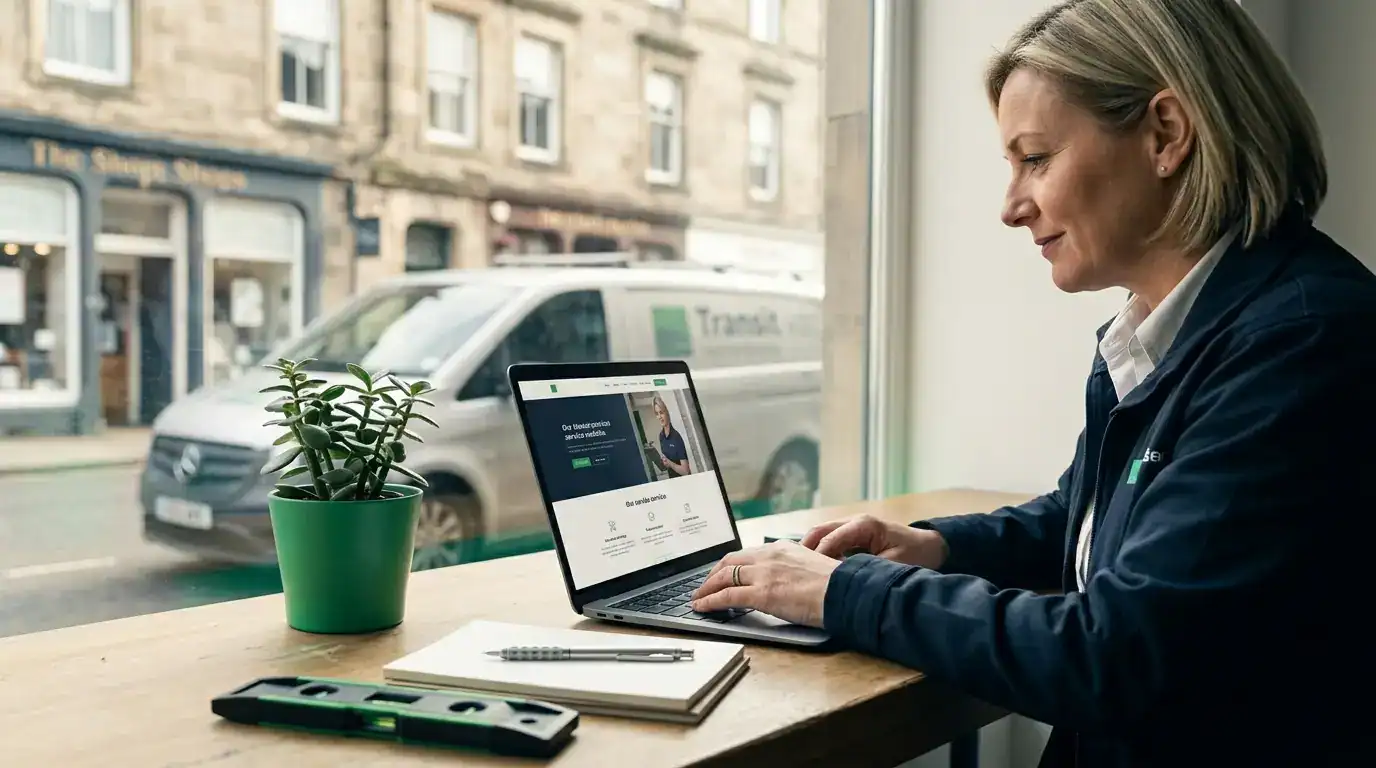
Does a small business need a website in 2026? Yes, and the case for having one has never been stronger.
Why this question still gets asked
Social media is free, Google Business Profile costs nothing, and plenty of small businesses seem to get by without a dedicated site. So it is a fair question. The honest answer is that free platforms are useful, but they are not yours. You are building on rented land, and the rules can change overnight.
A website is the one digital asset you own outright. Everything else points back to it.
What the numbers say
Around 97% of consumers search online before visiting a local business or making a purchasing decision. If you are not ranking anywhere in those results, you are not in the running. A Google Business Profile helps, but it works best when it links to a real website that backs up what your profile says about you.
UK small businesses with a website report higher customer confidence and more inbound enquiries than those without. That is not a surprise. A website signals that you are established, that you take your business seriously, and that customers can find out what they need without having to phone you first.
The trust factor
Before someone books a plumber, orders from an independent shop, or books a table at a local restaurant, they look you up. What they find, or do not find, shapes their decision before you have said a word.
A professional website tells that story for you. It shows your services, your prices if you choose to share them, reviews from past customers, and how to get in touch. An electrician with a clean, well-written site immediately looks more credible than one with only a Facebook page that was last updated two years ago.
Hospitality businesses feel this even more sharply. A restaurant or hotel without a website loses bookings to one that lets customers browse the menu or check availability instantly.
Google Business Profile works better with a website
Your Google Business Profile is valuable, and you should have one regardless. But it has limits. You cannot control the layout, you cannot add detailed content, and Google can suspend or alter your listing. Linking your profile to a website gives customers somewhere to land with full information, and it tells Google that your business is real and established.
Businesses with websites rank better in local search than those relying on a profile alone. Your site gives Google more to index: your services, your location, your reviews, the words your customers actually search for.
Leads while you sleep
A website does not knock off at five o’clock. A builder whose site ranks for “loft conversion Bristol” picks up enquiries from people searching at eleven at night, when no amount of leaflets or word-of-mouth would reach them. A boutique whose product pages appear in Google Shopping gets sales from customers who have never walked past the shop.
Service businesses benefit just as much. A freelance bookkeeper, a dog groomer, a driving instructor. Anyone whose livelihood depends on a steady flow of new customers cannot afford to rely only on referrals. A website opens a channel that works around the clock without any ongoing cost per click.
Standing out from competitors who have not bothered
A significant number of UK small businesses still do not have a functional, up-to-date website. That is a gap you can step into. If you are a local solicitor, a landscaper, or a café owner and your nearest competitor has a poor site or no site at all, a professional web presence immediately sets you apart.
This matters most in sectors where trust is high-stakes. Trades, legal services, financial advice, healthcare. In these areas, a credible site is not a nice-to-have. It is the baseline a customer needs before they will pick up the phone.
What about social media?
Social platforms are useful for staying visible and building an audience, but they cannot replace a website. You do not own your followers. If a platform changes its algorithm, restricts reach, or disappears, you lose that audience overnight.
Social media works best as a way to drive traffic to your site, not as a substitute for it. A retailer running Instagram ads should be sending people to product pages they own, not to a profile with a link in the bio. A tradesperson posting project photos should be pointing viewers to a testimonials page that helps convert interest into bookings.
What a small business website actually needs
You do not need anything elaborate. A homepage that explains who you are and what you do, a services or product page, a contact page with a form or phone number, and a handful of genuine customer reviews will do the job for most small businesses.
Speed and mobile-friendliness matter more than elaborate design. Over 60% of UK web traffic comes from mobile devices, so if your site loads slowly or is hard to navigate on a phone, you will lose people before they read a word. Clear calls to action, a visible phone number, and straightforward navigation are worth more than complex animations or heavy imagery.
A blog or resources section helps over time. Regular, relevant content gives Google more to index and gives customers a reason to trust your expertise, whether you are an accountant explaining allowable expenses or a florist writing about seasonal arrangements.
The cost of not having one
The businesses that skip a website are not saving money. They are losing leads to competitors who have one. They are paying more for word-of-mouth and referrals to do work a website would handle automatically. They are invisible to anyone who does not already know them.
For a trades business turning over £80,000 a year, a single additional job per month from organic search would pay for a professional website several times over. The same logic applies to a shop that picks up five extra online orders a week, or a salon that fills one more appointment slot per day through an online booking link.
Also worth reading: the best website builders for UK small businesses.
Verdict
A small business needs a website in 2026. The question is not whether to have one but how to make sure it actually works. A well-built site, properly set up for search, connected to your Google Business Profile, and kept up to date will generate leads, build trust, and set you apart from competitors who have not made the effort.
The most common reason small businesses do not have a website is that building one feels complicated or expensive. It does not have to be either.
Promotion
If you want a professional website without building it yourself, Trader Launch designs and builds websites for UK small and medium businesses from £495 setup and £150 per month. You get a fast, mobile-friendly site set up for local search, with none of the hassle of doing it yourself.
Does my Google Business Profile replace a website?
No. Your Google Business Profile is a useful listing, but it has limited content, no pages you control, and can be altered by Google. A website gives customers the full picture and helps your profile rank better in local search.
How much does a small business website cost in the UK?
It depends on what you need and how it is built. A basic DIY site costs very little upfront but takes time to set up, maintain, and optimise for search. A professionally built and managed site costs more, but you get something that actually performs, with someone else handling the technical side so you can focus on running your business.
Can I just use a website builder like Wix or Squarespace?
You can, and for a very simple online presence they are a reasonable starting point. The trade-offs are real though: load speeds tend to be slower, SEO control is limited, and you are responsible for keeping everything updated yourself. A professionally built site typically performs better in search and converts more visitors into enquiries, without the ongoing time investment of managing it yourself.
How long does it take to get leads from a website?
It depends on your sector and competition. A well-optimised site in a local market with low competition can start generating enquiries within a few weeks. Broader national terms take longer. Either way, the site works in the background every day, which no other marketing channel does for free.
Do I need to update my website regularly?
Basic pages like your services and contact details only need updating when something changes. If you add a blog or news section, regular posts help with search rankings. Most small businesses need minimal ongoing input once the site is properly set up.
